English News
End Of Term 2 :
English Department
The “Write” Direction: The term and semester update from the SOC English Department.
Thank you to all students and families who completed our recent book / reading questionnaire regarding our novel selections and choices for 2027. There were some very interesting suggestions.
Some old favourites and some up and coming contemporary fiction.
There were suggestions from a range of different genre types -from romance, historical fiction, dystopian or classic texts.
And naturally there were suggestions based on favourite authors – such as Steinbeck, Austen, Orwell, Green or Zevin.
The English teachers are always looking at different books and the way we can engage with our students by making connections to the text, whether it be in the messages that authors give the audience, the creative use of language to share an idea or impart an emotion or deliver a message.
Our Year 8 to 11 students have recently completed mid-year examinations based on the content that has been covered in Semester One. These assessments are an important measure to gauge the learning that has taken place and how well students have understood what has been covered and more importantly, that they can apply this knowledge into different situations. Hopefully, students did well and achieved the results they deserved based on the amount of effort they put in.
In Year 12, students have recently completed another major assessment (SAC) - a creative text based on the framework of “Personal Journeys”. The quality of their work was of a very good standard with students demonstrating their writing skills and ability to craft a very personal piece. Each one, an individual interpretation of the stimulus and each one highly authentic and original. Well done, you all should be proud of your efforts.
In our Year 7 to 10 classes students are getting ready to consolidate skills and knowledge in preparation for the next units of work that will be covered in Semester Two.
Year 7 will be reading “His name is Walter” in Semester Two. This is an Australian novel, written by Emily Rodda that has a very deep plot of a story within a story. Highly original with a great twist to keep you reading.
Year 8 will be reading “The Giver” by Lois Lowry. This novel is set in a dystopian future where people speak using the “precision of language” – just enough words to mean what they say, however, do all words actually have a literal meaning? In the semester, Year 8’s will also be completing a film study based on “Hunt for the Wilder People” and gaining a greater understanding of the way in which films are created using camera angles, perspectives, lighting, sound and Mise-en-Scène (the things that are in the shot).
Year 9 will be reading the novel “Hatchet” and working on a series of short Australian stories focused on the different ways in which people in Australia grow up – being influenced by families, parents and society.
Year 10 will be reading “Romeo and Juliet” – their first piece of Shakespear and making connections to contemporary texts that were heavily influenced by this story. Examples include “Looking for Alibrandi”, “Titanic”, “West Side Story”, “Avatar” and “Twilight”. These stories have all been influenced by the story of “Romeo and Juliet” and have elements of the plot in them. So Shakespear is not dead – he is merely evolving.
In Advanced Year 7 students are working on a unit based on visual persuasion that includes an oral presentation to the class based on their design and pitch of a new product. Later in the semester, students will work on a film study of “Back to the Future”. (The original) and take a deep dive into how film makers present images in different ways to entertain and inform an audience.
In Advanced Year 8 students will complete a unit of work titled "Choose your own Dystopian Adventure”. Students will select a novel of their choice that they must read, the only condition is that it must be from the dystopian genre. They will complete a reading journal and conduct independent reading circles with other members of the class. They will discuss their novels and compare these with the different texts that other students are reading. By doing this they will gain a deeper understanding of the different ways the dystopian theme can be presented. This will then lead to a film study of “The Truman Show” – A quasi-dystopian film posing the question “Can a person live their life on a TV show and still maintain their own freedom?”
In Advanced Year 9 students will be reading “To Kill a Mockingbird”. Students use the text to analyse character perspectives, social inequality, and ethical decision-making while building thoughtful discussion about fairness, compassion, and standing up for what is right.
In Advanced Year 10 students will be reading “Macbeth”. This text is a dark and powerful tragedy by William Shakespeare that explores human ambition, guilt, and the consequences of moral corruption, leading to Macbeth’s eventual downfall. Students will also work on developing their skills with argument analysis and constructing detailed responses to a shared stimulus. The ability to critically evaluate arguments and issues, then respond using well-reasoned and evidence-based support, is an essential skill that students will use throughout life.
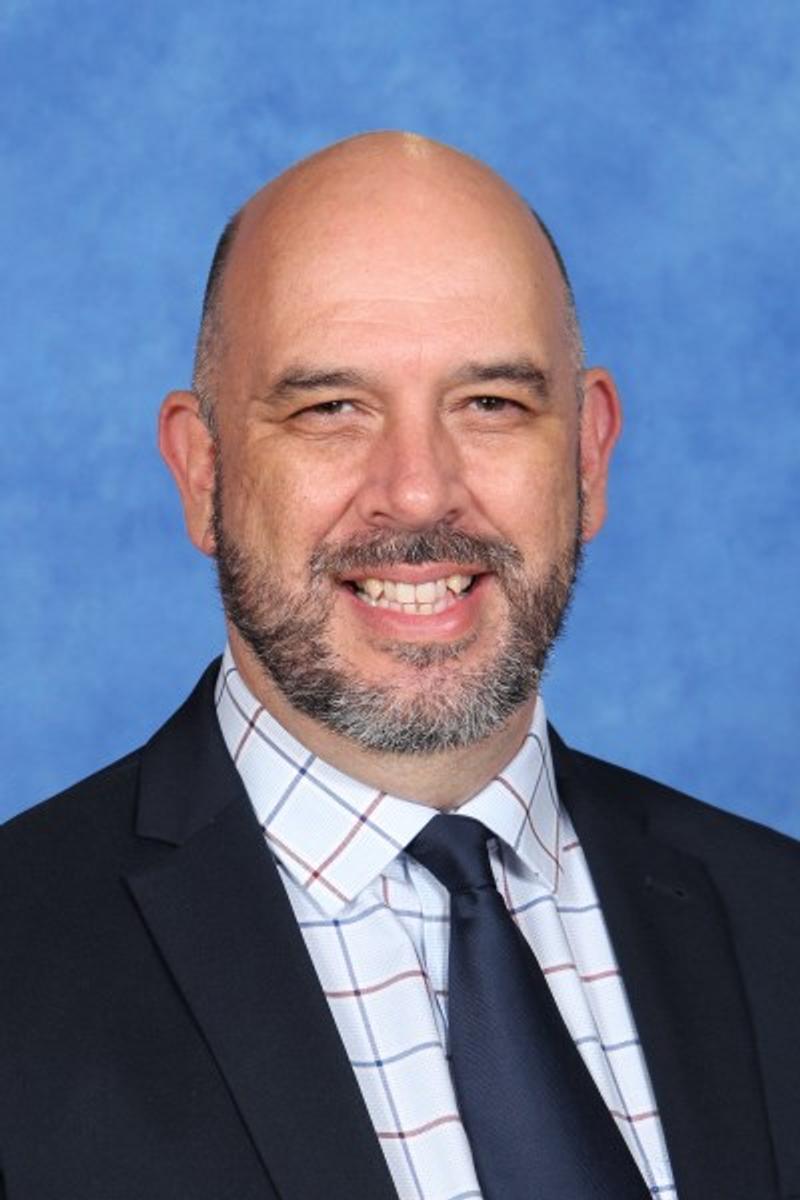
Adam Myors
Head of English
Victorian High-Ability Program – Term 2
This term, Goni Amitay, Benito Bygine, Isla Casto, Maya Fotaki, Ayelet Gonen, Ellen Hamachar, Theodore Hoffmann, Thomas Holm, Oscar Larkin, Ethan Lim, Victoria Mandel, Jenica Na, Rishaan Nandur, Konstantinos Natsioulas, Louis Nguyen, Rikza Rahman, Arthur Solanthi, Noah Rai Taikulswat, Kelvin Tran, William Trinh and Seth Tumino proudly represented our school in the Victorian High Ability Program (VHAP), participating in either English or Mathematics extension activities throughout the term.
In English, students explored a variety of thought-provoking texts and ideas, honing their skills in analysis, critical thinking, and creative writing. They collaborated with peers from other schools across the state, sharing perspectives and refining their ability to communicate clearly and effectively.
In Mathematics, students were challenged with complex problem-solving tasks that encouraged flexible thinking, the application of advanced reasoning strategies, and extending their understanding beyond the standard curriculum. Their persistence and curiosity helped them tackle unfamiliar challenges with confidence.
The VHAP program offers an excellent opportunity for our high-ability learners to push their limits, work alongside like-minded peers, and find inspiration from engaging with higher-level academic content. We congratulate our participating students for their commitment, creativity, and enthusiasm throughout Term 2.
To recognise their achievements, students will receive their Certificate of Completion at the start of Term 3 during their year level assemblies.