OCCUPATIONAL SUPPORT

Self-Regulation: What It Is and How to Support It
Building on the idea of sensory preferences, self-regulation is about how young people use that awareness, along with other strategies, to manage their emotions, thoughts and behaviours to what’s happening around us.
Self-regulation helps young people stay calm, focused and flexible, especially during challenges or changes. It develops gradually and continues well into adolescence. When teenagers can recognise and manage their emotions, they are more capable of:
- Staying engaged and focused in class
- Building positive relationships and making thoughtful decisions
- They experience reduced stress and emotional outbursts
- And develop independence and confidence
Understanding sensory preferences can support regulation: for example, a teen might take a short walk, listen to music, or fidget with an object when they’re feeling overwhelmed. Recognising these as healthy coping tools rather than distractions helps us to respond with empathy and guide their child toward positive regulation habits.
Everyone experiences a wide range of emotions, big ones, small ones, and everything in between. It’s completely normal to feel angry, sad, excited, or overwhelmed at times. The goal isn’t to avoid these feelings, but to help young people understand and manage them in healthy ways.
How This might look in the home
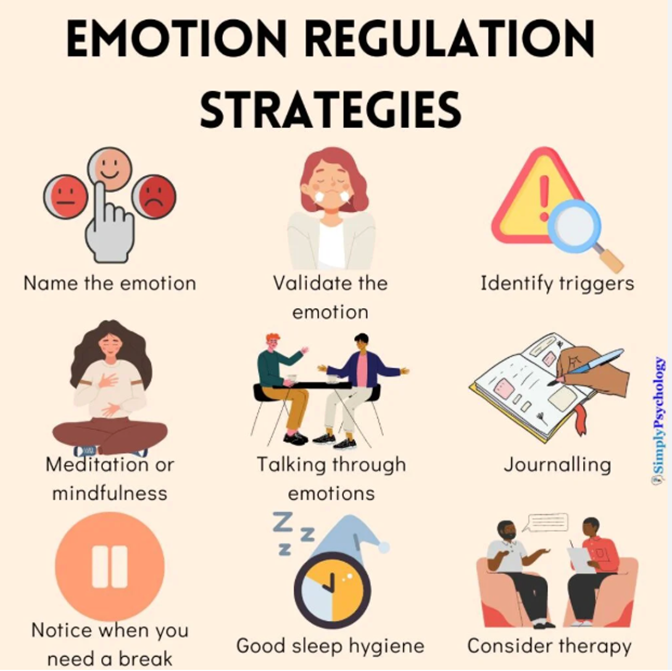
Notice patterns and triggers: Observe what situations or tasks tend to challenge your teen’s regulation, such as homework, social interactions, or transitions. Understanding these triggers helps your teen recognise when to use strategies that work for them.
Encourage reflection after strong emotions: After a big emotional response, set aside a calm moment to talk with your teen about what happened. Help them think about what they were feeling, what triggered the reaction, and which strategies helped or could help next time. This supports awareness of emotions and builds skills for managing future situations.
Help them name their emotions: As part of reflection, encourage your teen to put words to what they were feeling, whether it’s frustration, anxiety, excitement, or sadness. Naming emotions helps them understand their reactions, reduces overwhelm, and makes it easier to choose strategies to manage future situations.
Using sensory tools to support regulation: Teens can use sensory strategies to manage their emotions in real time. For example, a teen who feels anxious before homework might listen to music or take a short walk to calm down, while a teen who struggles to focus in class might use a fidget tool or squeeze a stress ball to help stay alert. Observing which strategies help your teen and encouraging them to use these tools in different situations helps them develop self-awareness and stronger emotional regulation skills.
Model calm behaviour: Demonstrate how you manage your own emotions in everyday life, such as pausing before responding when stressed. Teens learn from observing these behaviours and are more likely to adopt similar strategies themselves.
Encourage meaningful and enjoyable activities: Support your teen to engage in hobbies, sports, creative projects, or other activities that bring them joy and a sense of accomplishment. Doing things that are meaningful helps regulate emotions, reduce stress, and build confidence, while also supporting overall well-being. And doing it with them can further strengthen.