Wellbeing


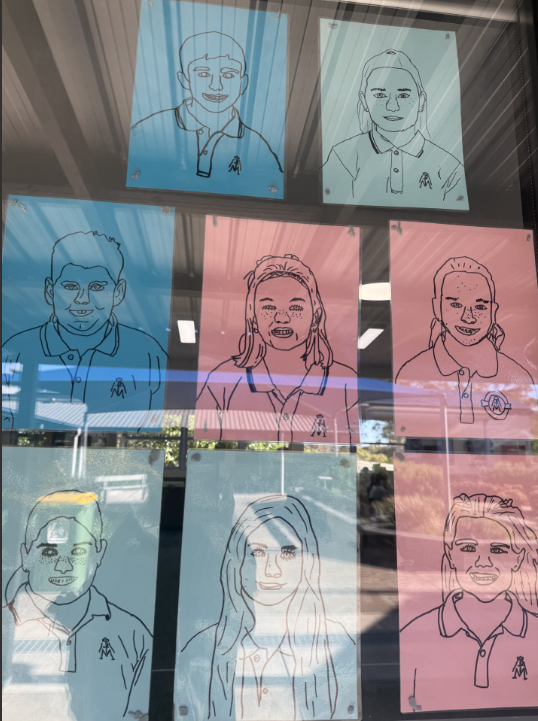
This week in Respectful Relationships, students explored the importance of belonging, connecting closely with our behavioural expectations of Care for Self, Care for Others, Care for Learning and Care for Environment. Junior students learned about personal space and how to care for themselves by speaking up when someone enters their “bubble.” Middle students discussed emotions, recognising that all feelings are valuable and help us understand and care for ourselves. Senior students examined the power of words, reflecting on self-talk and the importance of treating others with dignity, as we never truly know what someone else may be experiencing. Our Year 5/6 students celebrated their individuality by creating self-portraits that highlight what makes them unique and special.
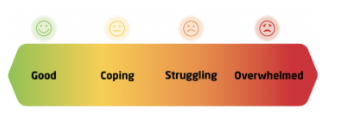
As we begin a new school year, we know this time brings lots of excitement, new friendships, and fresh opportunities. It can also bring change, and change can affect children in different ways. The Children’s Wellbeing Continuum is a simple, evidence-based tool that helps adults talk about how children are feeling. It provides a snapshot of a child’s social and emotional wellbeing at a point in time, using four stages: ‘Good’, ‘Coping’, ‘Struggling’, and ‘Overwhelmed’. By giving parents and teachers a shared language to discuss mental health, the Continuum helps us notice when a child might need extra support and respond early.
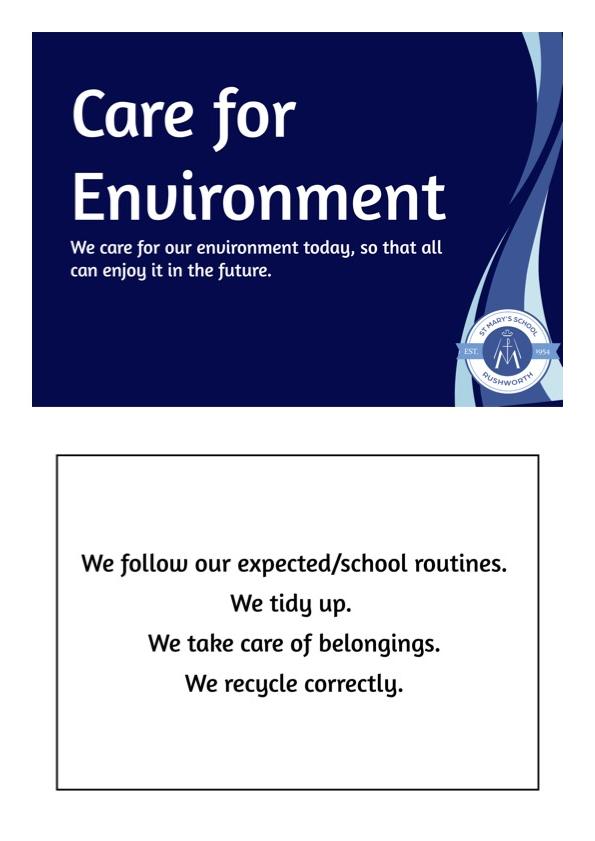
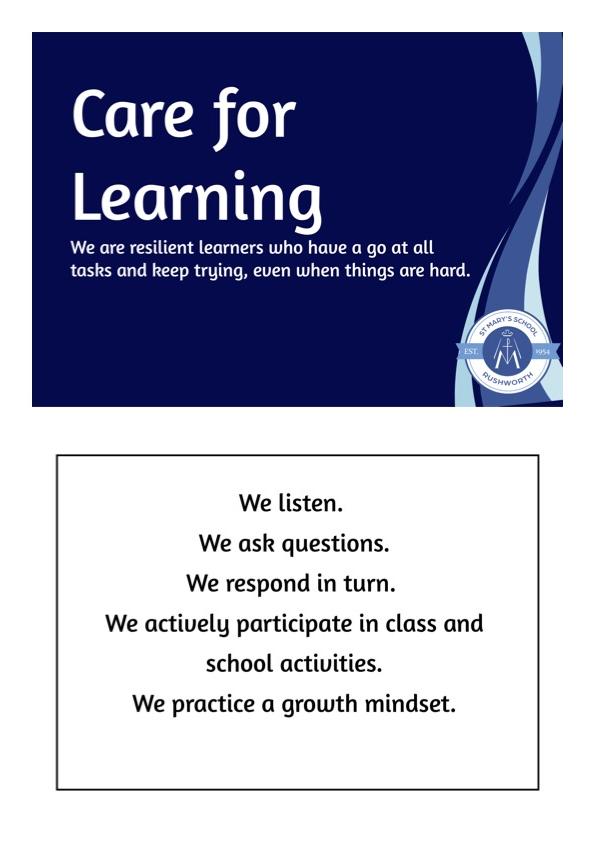
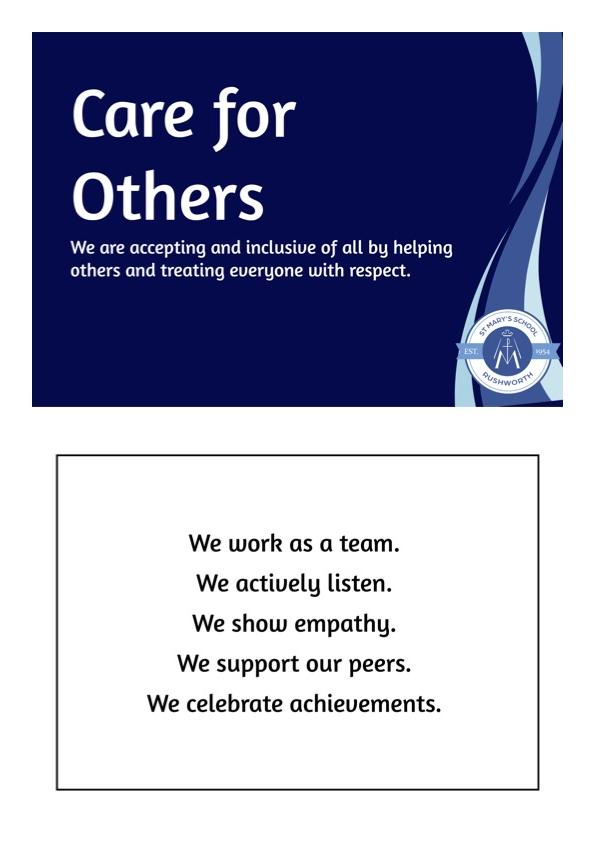
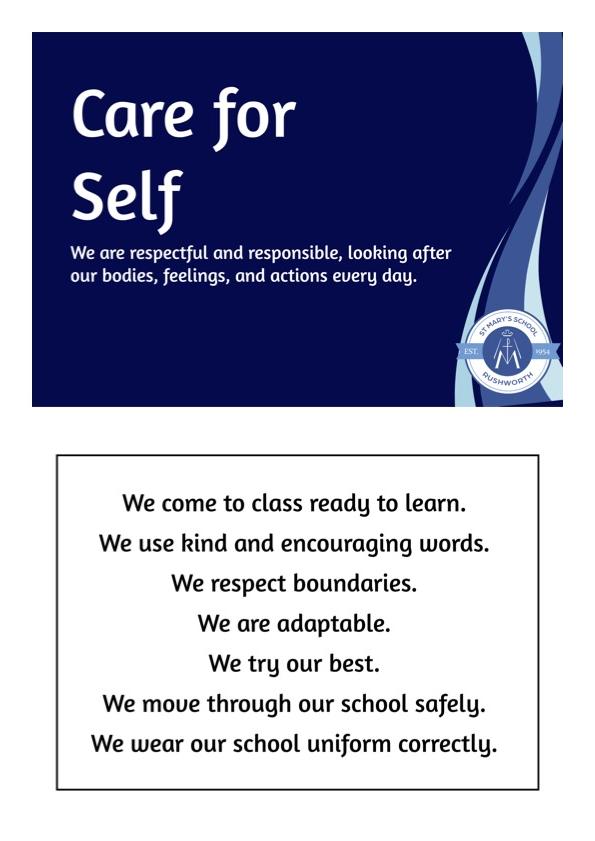
St Mary's Behaviour Expectations
Our expectations guide how we learn, interact and grow together at St Mary’s. They are built around our four key areas: Care for Self, Care for Others, Care for Learning and Care for Environment. These areas provide a clear and consistent framework for students, helping them understand what positive behaviour looks like across all aspects of school life.
By explicitly teaching and reinforcing the behaviours connected to each area, we create calm, predictable learning environments where every child feels safe, supported and ready to learn. When students understand what is expected and why it matters, they are better able to make positive choices, build respectful relationships and develop confidence in themselves.
We value working in partnership with families to reinforce these expectations, as consistency between home and school plays an important role in helping every child thrive.
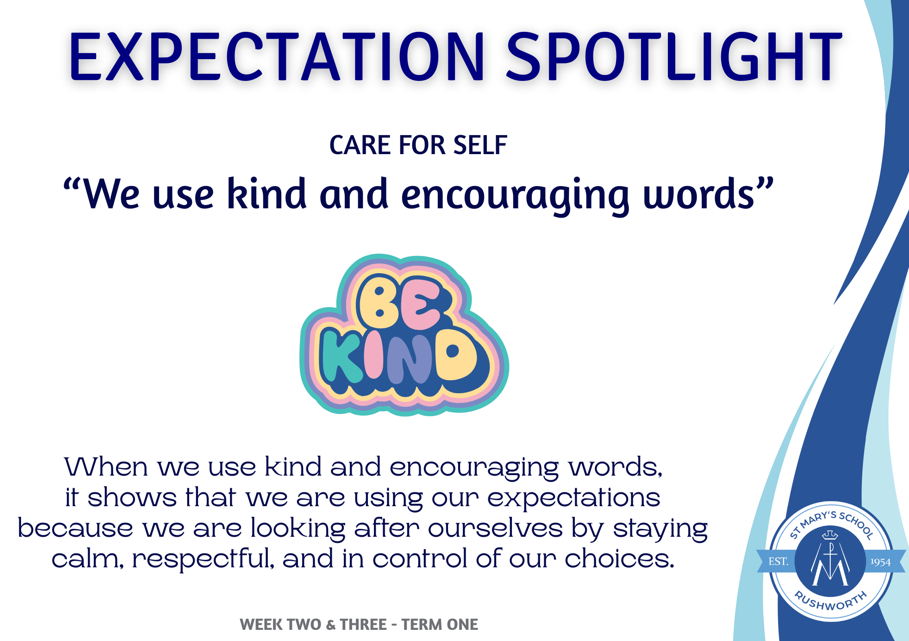
Expectation Spotlight – Each fortnight, we will highlight one of our expected behaviours as a focus across the school. Our Expectation Spotlight for this fortnight is “We use kind and encouraging words.”
Using kind and encouraging words means speaking to others in a way that is respectful, supportive and thoughtful. It includes the way we talk to our classmates, our teachers and even how we speak to ourselves. When students choose positive language, they are looking after themselves by staying calm, respectful and in control of their choices.
This focus also supports strong friendships and a positive classroom culture. Kind words build confidence, strengthen relationships and help students feel safe to take risks in their learning. When everyone feels supported, our classrooms remain calm, predictable and ready for learning.
We encourage families to continue these conversations at home by talking about the power of words and modelling positive, encouraging language in everyday situations.
At St Mary’s, our Whole School Expectations form an important part of our School Wide Positive Behaviour Support (SWPBS) approach and are guided by both the SWPBS Policy and our Student Behaviour Policy.
Each day, we explicitly teach students what these expectations look like in practice. Rather than assuming children simply “know”, we model, practise and reinforce the behaviours that help everyone feel safe, respected and ready to learn.
Our approach follows a clear behaviour response process. This begins with maintaining a strong focus on positive relationships, including a goal of five positive interactions for every one correction. Staff use two-part praise to acknowledge students, clearly name the expectation being demonstrated and commend students for demonstrating this, and reteach the expectation when needed. This supportive and consistent approach helps students understand what success looks like and gives them the opportunity to learn and grow each day at school.
We are currently developing a visual version of the behaviour response flow chart and will share this in a future newsletter so families can see how we support students and reinforce expectations across the school.