
Curriculum News
LEARNING AND TEACHING
At St Brigid’s, we use a teaching approach called Explicit Instruction. This means teachers give clear, step-by-step explanations, guide students as they practice, and provide helpful feedback along the way. Research shows this method helps all students build strong learning foundations, which helps lead to success. Lessons are carefully planned so that what students learn sticks in their memory and can be used in the future. Lessons within the Explicit Instruction model are carefully planned and structured to maximise learning. This structured approach not only promotes understanding during the lesson but also supports the transfer of knowledge into long-term memory, ensuring that students retain and can apply what they have learned over time.
SCIENCE OF LEARNING - Willingham's Simple Memory Model – Cognitive Load Theory
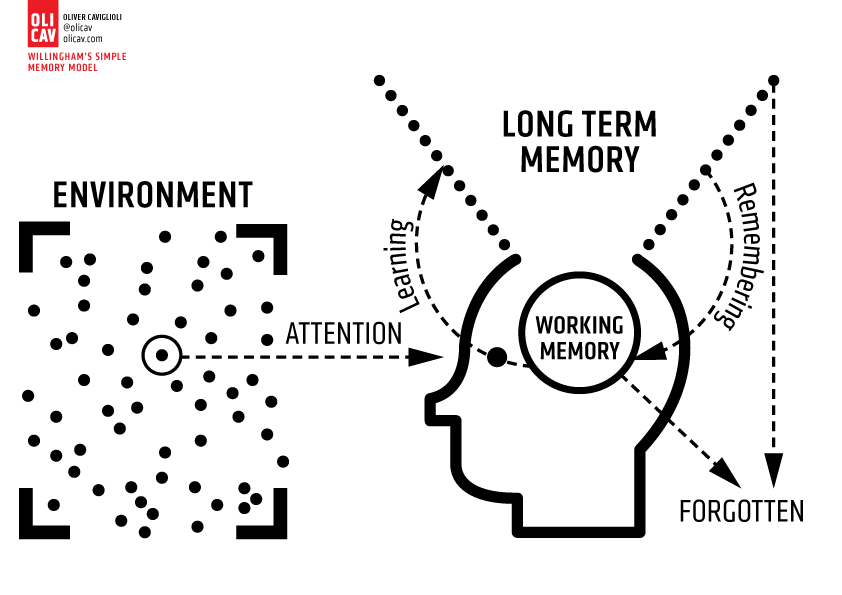
What is the Science of Learning? “Learning is change in long-term memory” (Australian Education Research Organisation (AREO), 2023)
Learning is most effective when it is clear, structured, and builds knowledge step by step. Lessons are organised, teachers clearly and directly explain new ideas, students have plenty of opportunities to practice, and they receive helpful feedback so they know how to improve. Teachers also regularly revisit previous learning to help students remember the content and move it into their long-term memory. Research from AERO (2023) outlines how students learn best and the teaching approaches that most effectively support this process, should you be interested in exploring this further. Click here for the link.
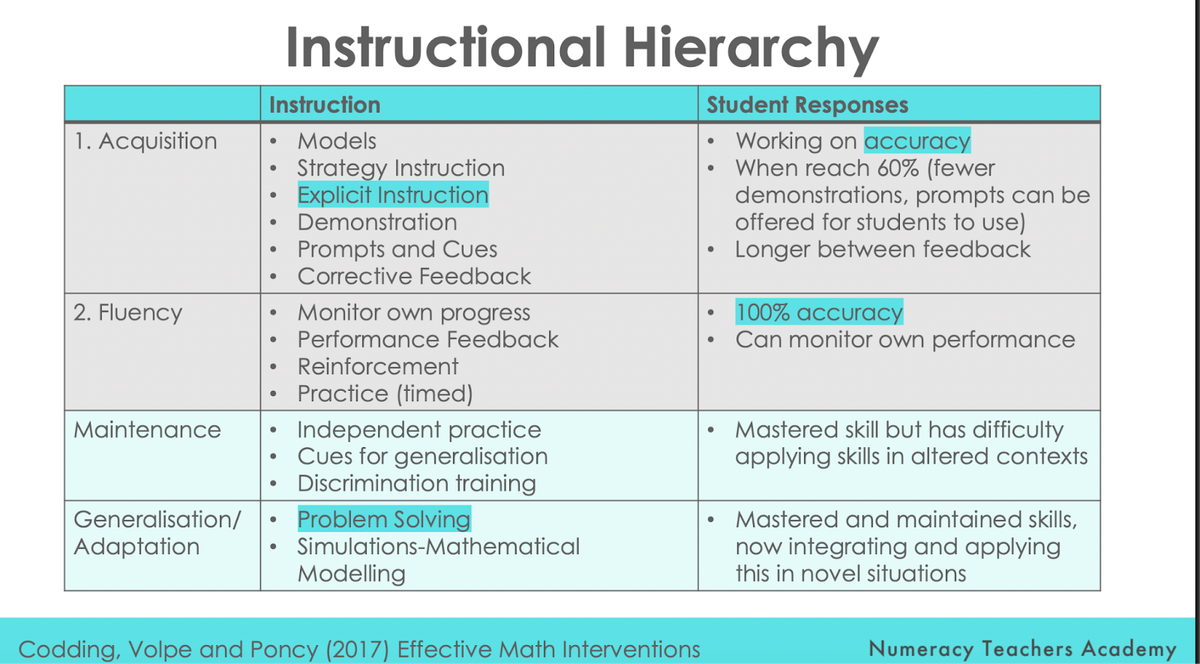
The Instructional Hierarchy Model guides the Mathematical Acceleration Program (MAPS). This model supports explicit teaching of skills and concepts, alongside the use of clear thinking strategies and our Daily Review of previous learning. The process follows a continuous pathway and aligns with our MACS Vision for Instruction and Vision for Engagement. It begins with Acquisition, where students are explicitly taught new skills and concepts. It then moves to Fluency, where students build confidence and accuracy through repeated practice. Next is Maintenance, supported by Daily Review to help secure learning in long-term memory. Finally, students reach Generalisation and Adaptation, where they apply their knowledge and skills to new situations and problems.
With thanks
Cassie Dirckze (Maths and Science Leader) and Suzie Ripp (Literacy and Humanities Leader)