
Learning and Teaching
Anna Robertson, Director of Learning and Teaching

Learning and Teaching
Anna Robertson, Director of Learning and Teaching
Spaced Practice and Retrieval Practice
As we move into the middle of Term Two, I want to share some research-based study techniques that can make a real difference to how effectively our students learn and retain information. Over the next four weeks, I'll be highlighting practical strategies that students can use across all their subjects. This is not always easy, and developing new study habits takes time and effort, but the evidence tells us these approaches genuinely work.
This week, I'm focusing on two foundational techniques: Spaced Practice and Retrieval Practice. Both require time to implement properly, which is why I'm sharing them now – well before major assessment periods, such as Exam Week in Week 8 of this term.
Spaced Practice:
Working Smarter, Not Harder
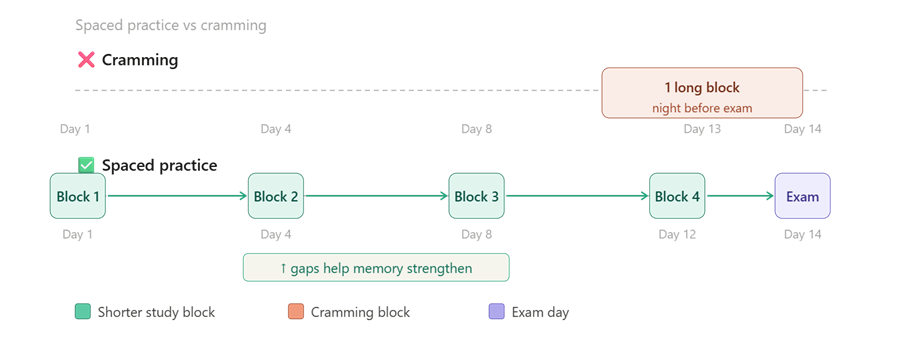
Spaced Practice means spreading your study out over time rather than cramming everything into one or two marathon sessions. The research is clear: our brains retain information far more effectively when we revisit material multiple times with gaps in between.
Here's why it works: each time you return to material after a break, your brain has to work a little harder to recall it. That effort – that productive struggle – is what strengthens the memory and makes it stick for the long term.
How students can use it:
I know this feels counterintuitive. Cramming can feel productive because the information is fresh in your mind the next day. But that's short-term memory, not learning that lasts. Spaced Practice asks students to trust the process, even when it feels less convenient.
Retrieval Practice:
Testing to Learn, Not Just to Assess
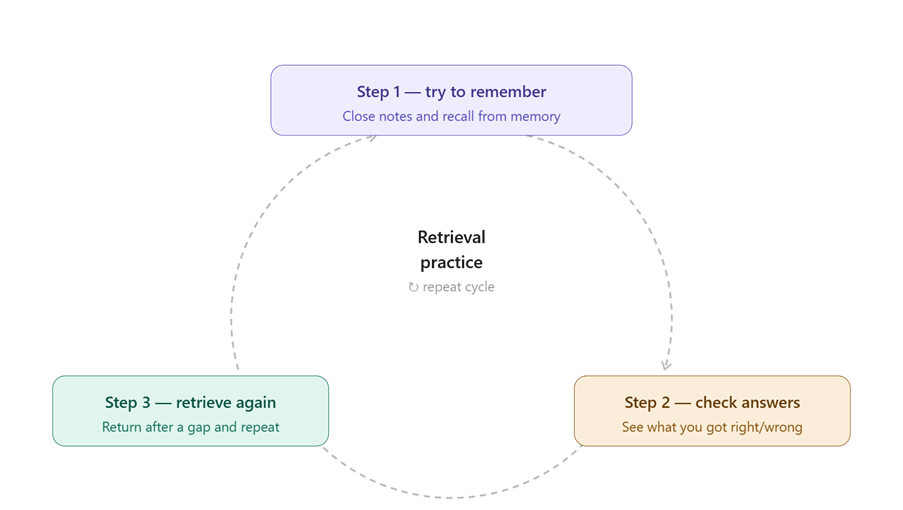
Retrieval Practice simply means bringing information to mind without looking at your notes. This isn't about formal testing – it's about using the act of remembering as a study tool itself.
Every time you force your brain to retrieve information, you're strengthening that knowledge. It's like exercising a muscle: the effort makes it stronger.
How students can use it:
The key is this: struggling to remember something is not a sign you're failing – it's a sign you're learning. That difficulty is doing the work.
Putting it into practice this week
I encourage students to choose one upcoming assessment or test and try planning their study using Spaced Practice. Mark three or four study sessions in your diary or record book between now and the due date. During those sessions, close your notes and use Retrieval Practice to test what you actually remember.
Parents and carers, you can support this by helping your child plan these sessions and checking in on whether they're sticking to the schedule. Building these habits takes support.
These techniques might feel uncomfortable at first – and that's completely normal. But I encourage students to approach them with curiosity and resilience, trusting that the effort now will pay off in stronger, longer-lasting learning.
As always, if students need support with planning or implementing these strategies, I'm here to help.