
Teens & Screens
Digital Habits - tips for parents/carers

Teens & Screens
Digital Habits - tips for parents/carers
Teens primarily use their computers and other digital devices for entertainment. Prominent educational neuroscientist, and author of The Digital Delusion, Dr Jared Cooney Horvath reports that, on average, teens passively consume rapidly switching content for approximately 2500 hours per academic year, compared to approximately 450 hours engaged in learning content. This disparity is alarming, to say the least.

Jared was the guest speaker at our Staff Professional Development Day this week. He shared with us evidence that shows that “Over the past two decades, the cognitive development of children across much of the developed world has stalled and, in many domains, reversed. Literacy, numeracy, attention, and higher-order reasoning have declined despite increased school attendance and expanded public investment.”
This is primarily because digital platforms that teens are engineered to capture attention, fragment focus and speed up task switching.
Computers were never specifically designed as a learning tool, and with what we now know about the Science of Learning (how the brain processes, transfers and recalls learned knowledge), schools are becoming more deliberate in planning intentional uses of devices in classrooms, just as families have to consider device use and screen times at home.
From 2027, all Victorian secondary schools are expected to include planned device-free learning time in their teaching and learning programs. Many of our Learning Areas have already been designing and implementing curriculum with this expectation in mind, so Wantirna College is well placed for a smooth transition next year. This also includes prioritising device-free homework and home learning activities.
Homework tends to be task-driven, such unfinished tasks from particular subjects, or designated revision worksheets designed to practice specific skills.
Whereas, home learning is an integrative form of after-school education. It encompasses activities that spark curiosity, foster questioning, and bring scholarly concepts to bear on actual experience. Activities such as shared reading, replicating a recipe cooked at school, discussing current affairs issues from multiple perspectives and studying the finer details of concepts learned at school.
Both have value and are more effective for learning if a device is not involved. Both have a significant impact on learning outcomes for secondary school students, as they are often required to engage with more increasingly complex tasks that help reinforce and extend learning.
Studies show that there is a positive correlation between the amount of homework and academic performance at the high school level.
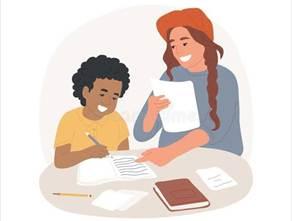
Parent engagement in learning and everyday positive parenting are major contributors to student learning, and can build confidence, motivation, capability and competence as learners. In this way, school education is a shared responsibility between families and schools.
Home learning activities are purposeful, curriculum-aligned, and appropriate to students’ skill level, designed to help students develop as independent learners, and, where appropriate, provide opportunities for parents/carers to partner in their teen’s learning.
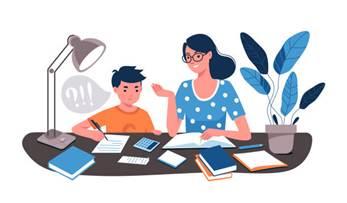
Physical books, hands-on tasks, and uninterrupted focus all build better memory, deeper comprehension, and stronger problem-solving skills than screens
Better Focus: Removing phones and tablets stops task-switching and message notifications from breaking a teen's train of thought.
Better Comprehension: Process complex information more thoroughly, and retain what they read on physical paper much better than on backlit
Better Memory: Writing with real pens and reading physical paper books helps the brain store and recall facts more easily.
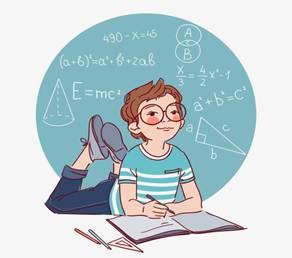
Mind mapping: helps to consolidate the relationships between concepts
Reading aloud: builds fluency, comprehension, pronunciation and vocabulary (the gateway to knowledge)
Sketching/Drawing: visual representations of relevant concepts or practicing field sketching or scientific diagram drawing
Creative Writing or Journaling: develops communication, imagination, critical thinking and writing endurance
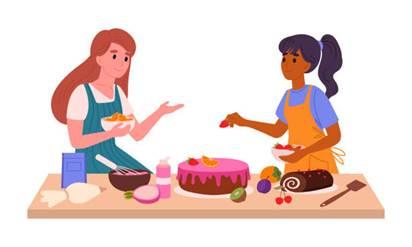
Cooking: uses knowledge of temperature, measurements, quantities and procedural reading and comprehension from following a recipe
Note-taking: following a discussion or reading of a text, make some notes about key points or events and characters
Read more about educational screen use: https://www.theguardian.com/education/2026/aug/16/neuroscientist-screen-use-schools-educational-technology-jared-cooney-horvath
Tanya Moran
Leader of Professional Practice