Grade 3 News

Dear Year 3 Parents/Guardians,
Just a quick reminder that students need to bring their satchel and diary to school every day. This helps with organisation, tracking reading progress, and ensuring teachers can send home any important notes. Also, nightly reading is a big part of our routine. Regular reading at home helps build fluency and comprehension skills. To support this, students can also access extra reading practice on Little Learners.
Please continue to check Compass regularly to stay up to date with important information, including the release of CATS (Common Assessment Tasks). A number of CATS have already been published, with a few more to come over the next couple of weeks. We encourage you to take the time to view your child’s work and leave a comment in the conversation box. This lets their teacher know you’ve seen the task and helps maintain a strong home–school connection.
Learning Focuses- Below is what we have been focusing on with our learning over the last few weeks.
Phonics
Recently, students have been learning about different ways to spell the /air/ sound and the /sh/ sound. Students have been identifying these patterns in words, practising spelling them in context, and applying this knowledge to their reading and writing tasks.
The /air/ sound can be spelled as:
- /air/ -air
- /are/ -care
The /sh/ sound can be spelled as:
- /sh/ -ship
- /ch/ -chef
- /ti/ -station
- /ci/ -special
Morphology
In our lessons, we’ve been learning how prefixes and suffixes can change the meaning or function of words, helping students build their vocabulary and understand how words work.
Most recently, we’ve been focusing on the prefix inter- and the suffix -ment:
- inter- means between or among (e.g. international – between nations).
- -ment is a suffix that turns a verb into a noun, showing the result or state of an action (e.g. enjoyment – the state of enjoying something).
Alongside this, students have been consolidating their understanding of the prefix in-, and the suffix -ly:
- in- can mean in, on, into, or not depending on the word (e.g. incorrect – not correct, inspect – to look into).
- -ly turns an adjective into an adverb, showing how something is done (e.g. happy becomes happily – done in a happy way).
Students have been practising identifying these word parts in context and applying them to their reading, spelling, and writing tasks.
Grammar & Syntax
Over the past few weeks, we’ve been building up students’ writing skills by focusing on three key areas: expanding sentences with adverbs, using the 5 W’s and How, and forming compound sentences using coordinating conjunctions.
1. Expanding sentences using adverbs of time, place, and manner Students have been learning to use adverbs to add more detail to their writing by answering the questions When? Where? and How?
Some examples include:
- Manner (How?) – eagerly, softly, quickly
- Place (Where?) – here, outside, inside
- Time (When?) – yesterday, today, soon
Example: The duck ate. → The duck quickly ate bread outside.
These adverbs help students add clarity and make their sentences more vivid and specific.
2. Expanding ideas using the 5 W’s and How We’ve also explored how to turn basic ideas into rich, detailed sentences by answering: Who/What? – When? – Where? – Why? – How?
Here’s one example students worked on:
- Who/what? – a duck
- When? – one overcast morning
- Where? – on a muddy river bank
- Why? – because it was hungry
Expanded sentence: One overcast morning, a duck was eating bread on a muddy river bank because it was hungry.
3. Forming compound sentences using coordinating conjunctions Our most recent focus has been on recognising and using coordinating conjunctions to form compound sentences.
Students practised combining two ideas into one sentence using conjunctions like and, but, so, and or.
Example: The duck was hungry. It waddled to the river bank. → The duck was hungry, so it waddled to the river bank.
This helps students connect related ideas clearly and build more complex, flowing sentences in their writing.
Writing
As part of our Talk for Writing unit, students have been working hard to create their own imaginative stories inspired by The Stone Trolls and Ice Dragons. Using the familiar warning tale structure, they planned narratives where characters are warned not to do something, go ahead anyway, and then face the consequences. This structure helps students think carefully about how to build suspense and shape their plots.
Once their ideas were mapped out, students moved on to the innovation phase, where they began drafting their own stories. They applied a range of writing tools they’ve been practising such as describing a character’s wishes, fears, and hobbies, using adjectives before nouns, and showing feelings through actions to add depth and detail to their writing.
With their first drafts complete, students have been focusing on how to edit and revise their work. They’ve learned how to spot small errors, strengthen their sentences, and improve word choice to make their writing more effective. This process has helped them take more ownership of their writing and understand the importance of refining their ideas.
Now, students have begun the exciting stage of publishing their warning tales, preparing their final versions with care. It’s been wonderful to see the creativity and effort each student has put into their stories, from wild dragons to sneaky trolls, and we’re looking forward to celebrating their finished pieces.
Knowledge
In Knowledge and Literature, students have continued exploring global history by diving into the fascinating world of the Vikings. We’ve looked into the Viking way of life, including how they lived, travelled, and explored new lands. Students were especially interested in the design of Viking longships and how these helped the Vikings become skilled explorers and traders across Europe and beyond.
We also explored key historical figures such as Erik the Red, who established a settlement in Greenland, and his son Leif Eriksson, who is believed to have been one of the first Europeans to reach North America specifically, a place now known as Newfoundland in Canada, which the Vikings called Vineland or Wineland. These stories helped students understand the adventurous and often dangerous journeys the Vikings undertook.
To deepen our understanding of Viking culture, we looked into Norse mythology and the gods the Vikings worshipped such as Odin, Thor, and Freyja. Students were fascinated to learn that some of our days of the week are named after these gods, like Thursday (Thor’s Day) and Wednesday (Odin’s Day).
Maths
In Maths, we’ve been developing our understanding of subtraction within 1000. Students have been working through a range of strategies, including the split strategy (with and without regrouping), the jump strategy, the vertical algorithm, and using place value tables to support their working. They have also applied these strategies to solve worded problems, helping them make connections between number skills and real-world situations.
We’ve now started a new unit on measurement, with a focus on length. Students have been learning to measure using metres and centimetres, compare different lengths, and calculate total lengths by adding and subtracting metres and centimetres. This hands-on unit has helped build their understanding of how measurement is used in everyday life.
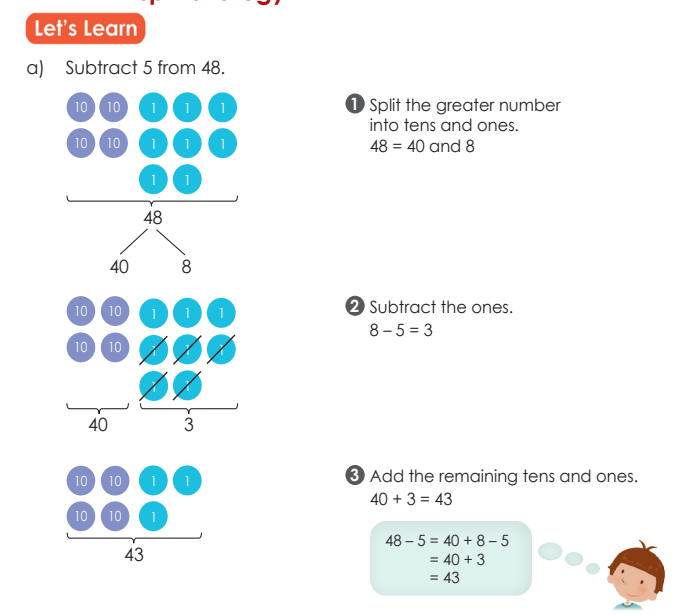
Split strategy (without regrouping)
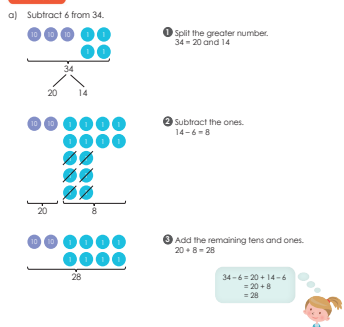
Split strategy (with regrouping)
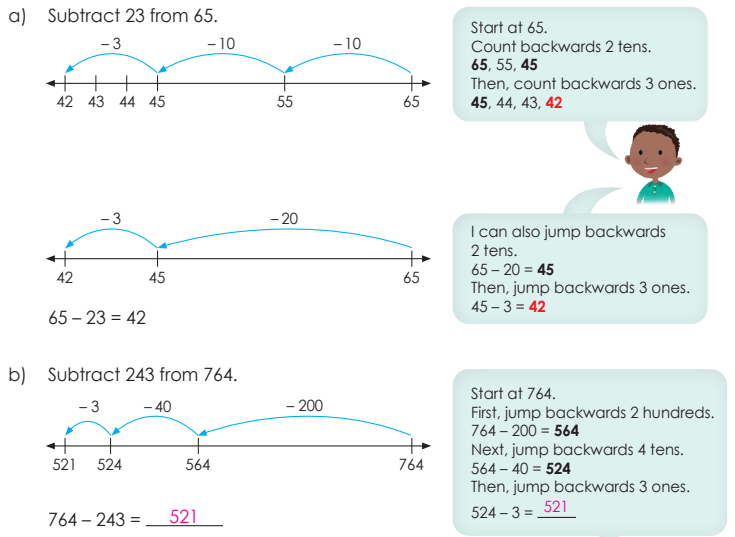
Jump Strategy
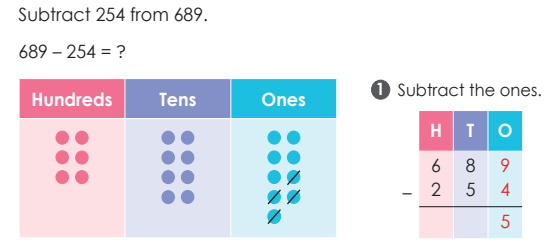
Place value without regrouping
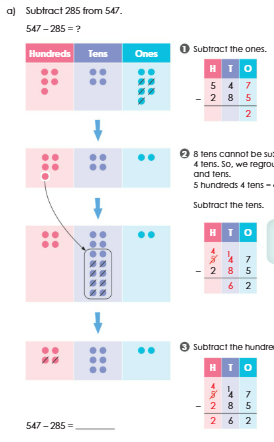
Place Value with regrouping
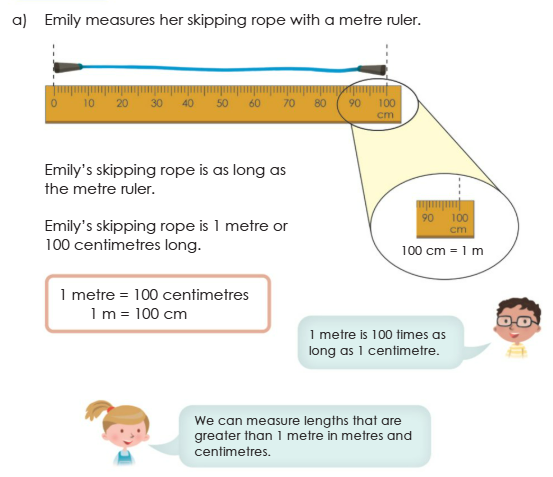
Learning that 1m is the same as 100cm
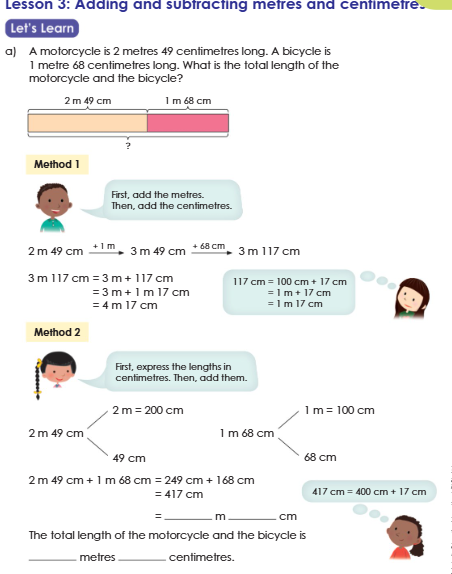
Adding and subtracting metres and centimetres:
Split strategy (without regrouping)
Split strategy (with regrouping)
Jump Strategy
Place value without regrouping
Place Value with regrouping
Learning that 1m is the same as 100cm
Adding and subtracting metres and centimetres:
SEL
In Social and Emotional Learning, students are learning how to recognise different types of problems and are developing skills to become confident problem-solvers. They are practising how to stay calm, think through a problem, consider others’ perspectives and choose respectful solutions. These strategies are helping students build resilience and strengthen their ability to navigate challenges both in and out of the classroom.
Upcoming Events:
- Scholastic Book Fair, Monday 19th May - Friday 30th May
- Curriculum day, Thursday 5th June & Friday 6th June
- King's Birthday, Monday 9th June
- Swimming, Monday 16th June - Friday 20th June
- Last Day of Term 2, Friday 4th July
Thank you for your continued support in continuing and strengthening our home and school relationship, which is so vital for students.
Miss Stapleton, Miss Henzell and Mr Francis