
Wellbeing

Introducing Emily Bickerton
This term, Emily Bickerton has joined the Wellbeing Team for her first placement under the supervision of Anna Baker, the Mental Health and Wellbeing Leader at TPS.
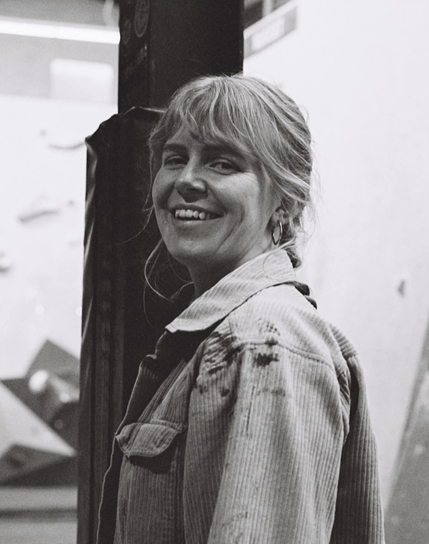
Emily is currently studying a Bachelor of Counselling and Psychotherapy at Ikon Institute and is working towards qualifying as a psychotherapist and counsellor at the end of 2027. She has a strong interest in early relational experiences and the ways children’s emotional wellbeing can influence learning, behaviour, and development. She is particularly keen to develop a deeper understanding of how school environments can foster resilience, emotional regulation, and connection, and how therapeutic thinking can support children within an educational setting.
Emily is enjoying being part of the TPS community and will be with the team until late April.
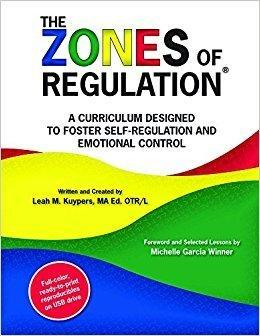
Zones Of Regulation
Thornbury Primary School teaches the Zones of Regulation as part of their wellbeing.
Concept designed by Leah Kuypers, occupational therapist teaches students:
It gives students, teachers, and parents a common language to discuss emotions.
The Zones of Regulation are simple for kids to understand.
Kids know the different colours, recognise their feelings and use strategies to move to Green Zone (calm down or feel okay).
Teaching healthy coping and regulation strategies allows kids to help themselves when they become stressed, anxious, or sad.
Typically, kids who can self-regulate will turn into teens who can self-regulate.
- Understanding the emotions of others helps with empathy and friendship skills.
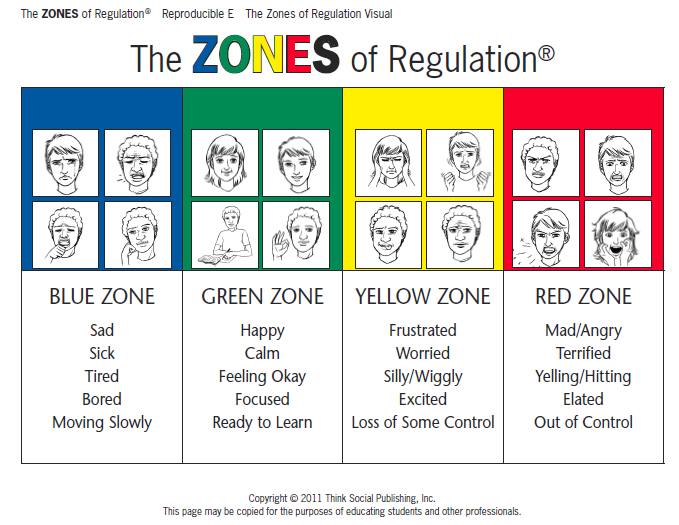
Identify your own feelings using Zones language in front of your child (e.g. “I’m frustrated, I am in the yellow zone”)
Talk about what tool you will use to be in the appropriate zone (e.g. “I’m going to go for a walk, I need to get to the green zone”)
Label what zones your child is in throughout the day (e.g. “you look sleepy, are you in the blue zone?”)
Teach your child what Zones tools they can use (e.g. “it’s time for bed, let’s read a book together in the rocking chair to get to the blue zone”)
- Share how their behaviour is affecting your zone (e.g. “I go into the blue zone when you use unkind words”)