
From the Principal
Samantha Jensen

From the Principal
Samantha Jensen

Dear Parents and Carers,
As we reach the midpoint of Term 2, I would like to acknowledge the outstanding commitment of our teachers in preparing for and engaging so thoughtfully in our recent Parent, Teacher, Student Conferences. These conversations are a vital part of our learning partnership, and I am deeply grateful for the care, professionalism, and genuine interest our staff bring to each interaction with students and families. I also extend my sincere thanks to our parents and carers for your time, presence, and openness in this process - your engagement is both valued and essential to the growth and educational wellbeing of your daughter.
It has been a busy few weeks and my appreciation also goes to those members of our community who have completed the MMG survey. Your insights and perspectives will play a significant role as we begin shaping the College’s next strategic plan. Ensuring that all voices are heard is central to this process, and your contributions will help to guide our future with clarity, purpose, and shared vision. If you have not yet completed the survey, you still have time to do so. The MMG Survey will now be open until 31 May to ensure we have a comprehensive sample from all stakeholders.
We now look ahead with anticipation to our upcoming Open Day this Sunday - let us pray together for blue skies to match the warm spirit of welcome we hope to extend! My thanks in advance to the many staff, support staff, student volunteers, and our Parent Partnership Panel whose generous preparation and collaboration will make the day such a meaningful and joy-filled experience for prospective families.
You will also find in this edition a thought piece that follows on from my article late last year on The Human Edge and the power and gift of presence. It is my hope that this reflection offers a moment of pause in the busyness of daily life, and perhaps some gentle conversation starters around your dinner tables. The gift of presence is a precious feature of our shared humanity – one that resonates deeply with our Franciscan tradition that calls us to be attentive, compassionate, and fully with one another in each moment.
In my previous reflection, The Human Edge, I explored the imperative for education to remain deeply human in an age shaped by technological acceleration. I posed that the true edge of learning lies not in what we can automate, but in what we must choose to protect: empathy, creativity, curiosity, and connection.
Yet this raises a quieter, more demanding question: How do we live this, day by day, in our classrooms, our schools, our homes, and our relationships with young people?
The answer, I suggest, lies in the practice of presence. As we began our year together at Mount Alvernia College in 2026, we set as our working mantra for the year our 3 P’s; propagate (the good), prune (the unnecessary) and (remain in a state of) presence. Our Human centred approach does not promote an abandonment of technology! On the contrary, we are not luddites! but we are a community committed deeply invested in the where, when and how we use technology.
We live in an age of divided attention.
Our days are punctuated by notifications, schedules, and an undercurrent of urgency that pulls us in multiple directions at once. As educators, the term cognitive overload has become as much about the work intensification of teachers as it has for our learners. In such a world, presence no longer happens by default, it must be chosen.
To be present is more than to be physically alongside another. It is to offer our attention fully and freely. It is to notice, to listen, to attend. Presence is the quiet countercultural act of giving our full attention in an age that rewards fragmentation and stolen focus.
In the Catholic Franciscan tradition, we are reminded of the sacredness and dignity of each person and each encounter. Presence, then, is not efficient - it is reverent. It acknowledges that the person before us is worthy of our time, our attention, and our care.
Young people, perhaps more than ever, are attuned to this distinction. They know when we are distracted. They know when we are hurried. And they know, keenly, when they are truly seen.
Presence shapes formation.
When a young person is met with full attention, something foundational takes root:
Over time, these moments accumulate into a sense of belonging and identity. They enable students not only to learn, but to flourish.
Conversely, the quiet absence of presence - when we are perpetually preoccupied or only partially attentive - can foster a subtle but powerful sense of invisibility quickly eroding any sense of identity and belonging.
If, as educators and parents, we are committed to nurturing the whole person, then presence is not optional. It is essential.
Presence is not a single act but a discipline—one that is formed in habits, in choices, and in the rhythm of our days.
1. Attentive Listening
Presence begins with listening - not to respond, but to understand.
This requires restraint. It asks us to pause, to resist the urge to interrupt, to allow space for silence. It invites us to listen not only to words, but to what sits beneath them - emotion, uncertainty, hesitation.
In doing so, we communicate something profound: you are worth my attention.
2. The Power of Small Moments
Presence is often found in the ordinary.
A greeting at the door. A name spoken with care. A moment of eye contact in a busy day. A quiet check-in: “How are you, really?”
These are not peripheral interactions - they are formative ones. They build trust, deepen connection, and create the psychological safety in which learning can thrive. In a world that seeks scale and efficiency, these small human exchanges remain irreplaceable - this is our human edge.
3. Modelling Humility and Authenticity
To be present is not to be perfect.
Indeed, it is often our willingness to be openly, authentically human that invites connection. When we acknowledge uncertainty, admit mistakes, or share appropriately of ourselves, we create space for young people to do the same.
This reflects a deeply Franciscan disposition - one of humility and relational openness. It reminds us that education is not simply the transmission of knowledge, but the formation of persons in relationship.
4. Creating Spaces for Presence
Presence is not only personal; it is structural.
The environments we create either enable or erode attentive engagement. When every moment is filled, when cognitive load is excessive, or when devices dominate attention, presence becomes difficult to sustain.
We must therefore design for it:
by creating boundaries around technology where needed
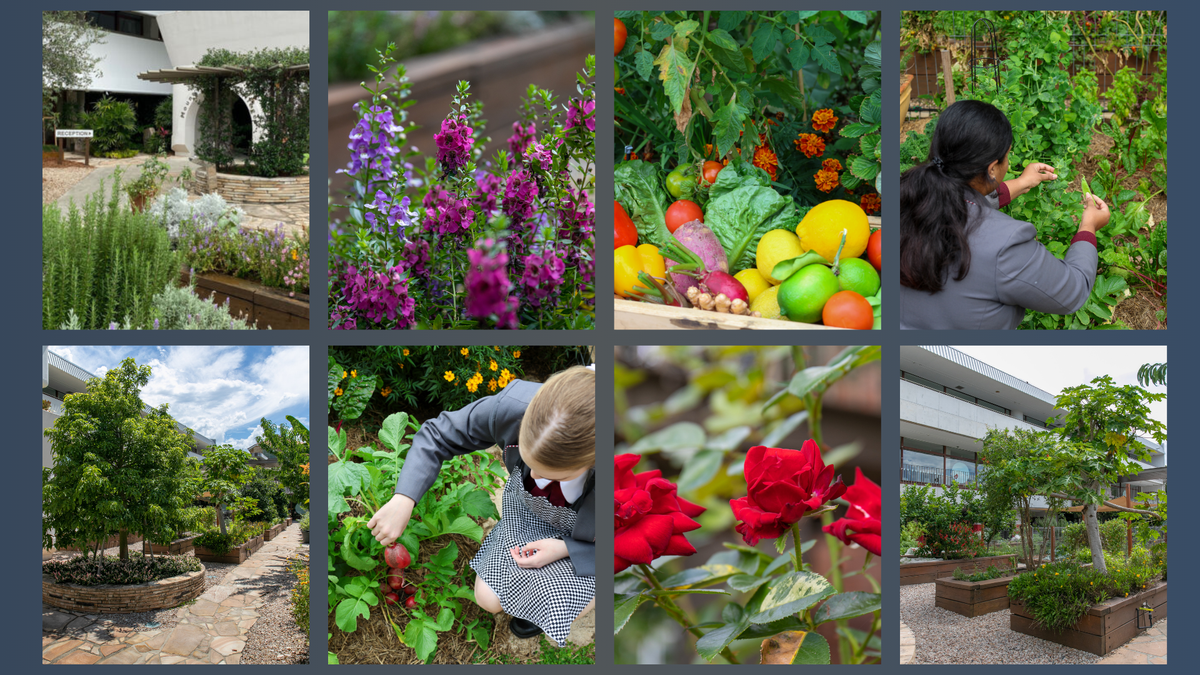
At Mount Alvernia College, our commitment to designing and building exquisite places for contemplation and pause; exemplified in our La Foresta Gardens and soon to be completed Library Precinct - The Canticle, are all expressions of the physical spaces which encourage moments of presence.
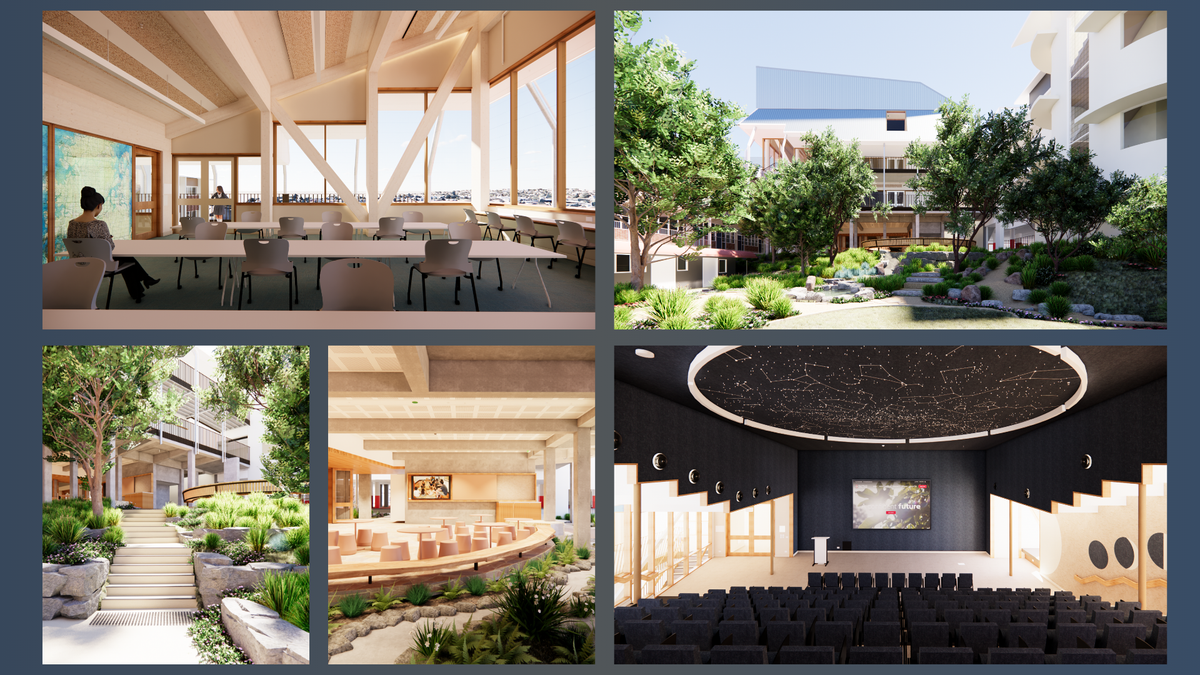
In doing so, we affirm that attention is not an infinite resource - it is something to be scheduled, planned for, and safeguarded.
5. Reclaiming Time as a Value
At its heart, presence is a decision about time.
The pace we set communicates what we value. When our lives are overscheduled and relentlessly driven, we risk signalling that productivity matters more than people. These are genuine challenges for engaged and aspirational students, parents, and schools.
To reclaim presence, we must be willing to reclaim time:
for unstructured connection
These moments are not inefficiencies; they are the very spaces in which relationships are formed and meaning and character is made.
If the Human Edge is grounded in empathy, curiosity, and connection, then presence is the condition that makes these possible.
Presence is how our values become visible.
As Educators and Parents, The Human Edge will not be secured through innovation alone, but through our willingness to be fully present to the young people entrusted to us - and to one another.