
Learning & Teaching News

The General Achievement Test (GAT)
Coming up next month on Tuesday 16 June is the annual General Achievement Test (GAT), a key component of assessment for students in VCE and VCE VM completing a Unit 3/4 subject. Results from the GAT are a valuable indicator of students’ literacy and numeracy skills and can be shared with prospective employers.
In addition, for students completing a scored VCE program, the GAT supports quality assurance in the VCE by contributing to the statistical moderation of school-based assessments, verifying external assessment scores and informing the Derived Examination Score (DES) process when needed. The GAT is critical as it helps ensure fairness and consistency across the state by providing an additional data point to align school and external assessments and support students affected by disadvantage during exams.
This week, VCE students at both campuses completed a ‘Practice GAT’ under exam conditions in preparation for the real GAT next month. As the GAT assesses general knowledge and skills, students are not required to complete additional special study for it; however, by sitting a Practice GAT, we train students to consider and refine their exam-sitting skills, such as: using reading time actively and effectively, managing writing time, and planning answers for extended response questions.
We wish our Year 10–12 students the best of luck for the upcoming mid-year exams and the GAT.
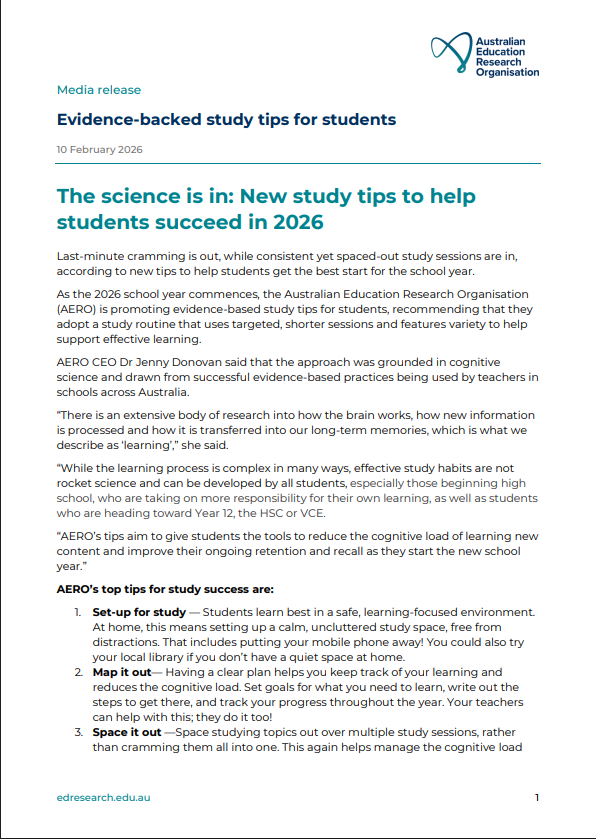
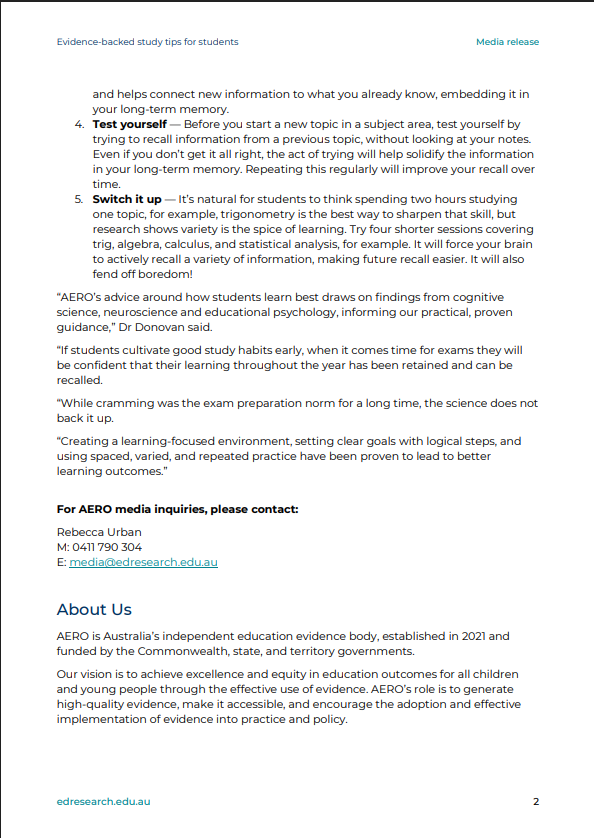
Evidence-backed study tips for students
The attached article from the Australian Education Research Organisation (AERO) provides practical, evidence-based study strategies to support students throughout the year. Drawing on cognitive science and educational research, the article highlights simple habits such as spaced practice, self-testing, and varied revision routines that can improve retention, reduce cognitive overload, and strengthen long-term learning. It is a worthwhile read for both students and families as we continue to build positive and sustainable study habits in 2026.
Supporting Inferential Thinking at Home
At St Peter's College, we are placing a strong focus on developing students’ inferential thinking. This is an essential skill that helps learners move beyond what is explicitly stated and think more deeply about ideas, texts, and the world around them.
Inferential thinking is often described as 'reading between the lines.' It involves using clues, prior knowledge, and reasoning to draw conclusions, make predictions, and form thoughtful interpretations. This skill is critical not only for reading comprehension, but also for problem-solving, critical thinking, and lifelong learning.
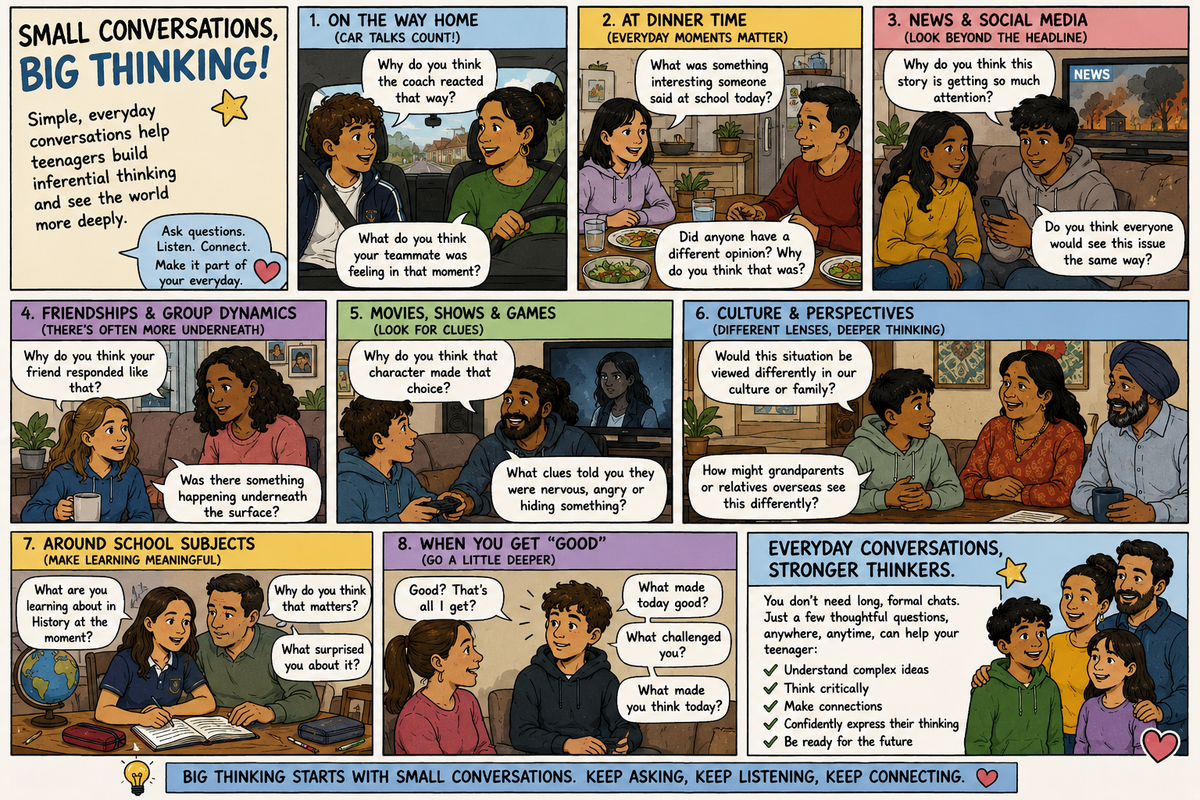
Families play an important role in strengthening these skills, and the good news is that it can be done through simple, everyday conversations at home.*96.3
What does this look like in practice?
Opportunities to build inferential thinking naturally arise when engaging with:
Books and stories
News articles or current events
Podcasts or radio segments
Documentaries or films
Rather than focusing only on what happened, you can support your child by asking questions that encourage deeper thinking.
Helpful questions to ask
You might try questions such as:
'Why do you think that happened?'
'What clues made you think that?'
'How do you think this character was feeling? What makes you say that?'
'What do you think might happen next?'
'Does this remind you of anything in real life?'
These types of questions prompt students to explain their thinking, justify their ideas, and make connections.
Why it matters
When students regularly practise this kind of thinking, they become more confident and independent learners. They are better able to:
Understand complex texts
Engage in meaningful discussions
Analyse information critically
Apply their learning in new contexts
By incorporating small, thoughtful conversations into everyday routines, families can make a significant impact on their child’s learning. These discussions do not need to be long or formal! Simply taking a few extra moments to explore the 'why' and 'how' behind ideas can make all the difference.
Mr Nigel Patawaran
Senior Years Curriculum Leader (CLN)