Student Perspective

Alyssa Weir on La Trobe University’s Holsworth Biomedical Summer School
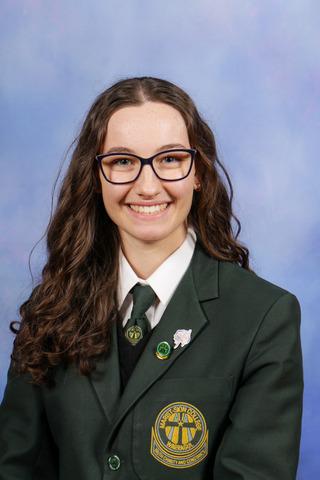

Alyssa is our College Capitan and is a highly motivated individual who makes the most of her opportunities. This is her recorded perspective on the La Trobe University Holsworth Biomedical Summer School:
“I had the amazing opportunity to attend La Trobe University’s Holsworth biomedical research initiative summer school. I found out about this event through Mrs Elly Martin and applied through La Trobe's website. This was a three day camp at their Bendigo campus, it promoted studying biomedical science, health science, medicine and other health related courses in a rural environment. This opportunity allowed me to explore the university for a few days and discover a course I would love to study.
Day 1
- Registration/check in: including a welcome, receiving a tote with merchandise, keys to our on-campus accommodation.
- Lunch: an opportunity to be introduced to the staff that would be with us for the summer school as well as the other students who had travelled from all over rural Victoria as well as a few students from Albury NSW to attend this event.
- Campus tour.
- Introduction of the theme for the 3 days
- climbing Mount Everest
- This seems like a really abstract theme for a health science summer school however it tied in well with each activity we did.
- We specifically looked at how this theme related to treating patients at a high altitude and in such extreme cold temperatures.
- First Lab Prac - Exercise science
- Focused on the movement and muscles that would be used when climbing and how the movement of those muscles change when the body becomes fatigued.
- Second Lab Prac - Paramed
- We had a practical demonstration of how a patient would be strapped into a carrier for transport and the types of treatment that we would be able to provide.
- The example used was that a hiker had fallen through some snow on Mt Everest and had likely broken their nose, arm and a rib.
- We then spoke about how we would treat the patient before transporting them to a hospital.
- We would need to…
- Stop any bleeding
- Warm up the patient in a foil blanket
- If they needed any fluids they would need to be warmed before being given to the patient to prevent them from freezing on the way to the patient.
- After this we had a session called inexplicable diseases - this is a popular session which they often run for events like this.
- We were given the description of a mysterious disease which was killing a tribe of indigenous Indonesian people
- In groups we were then given a packet of information which we were either a doctor or an anthropologist. An anthropologist is someone who scientifically studies humans and their customs, beliefs, and relationships.
- With this information we had to figure out how this disease was being spread throughout the population, was it contagious, genetic and how so.
- No one ended up with the correct answer however we all had similar thought processes and were close…
Day 2
- The next day we started in the anatomy lab
- Here we could view their life-like human models which we could check the pulse, heart rate, and breathing rate of.
- They also had VR where we could look at human systems and dissect them.
- As well as large interactive screens with human systems which were similar to the VR.
- The fourth Lab we did was Biomed
- Here we looked at blood samples under a microscope.
- After this we made our own slides with horse blood and viewed these in different solutions, some of which caused the blood cells to burst.
- We also viewed some frozen horse blood under a microscope which we couldn't see any blood cells in because they had all burst. This displayed how fragile blood is and how it would be incredibly difficult to perform a blood transfusion in the Himalayas.
- After this we had a collaboration activity called solving the problems of tomorrow through collaboration and innovation which we focused on our soft skills including communication and group work.
- During lunch we had a presentation on the biomedicine course at Latrobe including their guaranteed pathway into postgraduate medicine.
- Another lab prac where we looked at the pharmacy course at Latrobe
- In this prac the lecturer showed us a few different types of drugs including patches and tablets and spoke about other methods of drug delivery
- We had the opportunity to view some of the pharmacy students practical exams in which they made and packaged paracetamol
- After this we had the opportunity to make lip balm as we had spoken about creams being a method of drug delivery
- We were told that moisturised lips were important when climbing Mt Everest to prevent cracking and a site for infections to develop.
- In this prac the lecturer showed us a few different types of drugs including patches and tablets and spoke about other methods of drug delivery
- Our final lab prac for the summer school was dentistry
- I did not expect this to be very enjoyable however we were fixing a broken tooth from the injured hiker on Mt Everest
- After we completed the filling we then took a mould of the teeth much like the ones you receive at the orthodontist
- After this we performed some fissure fillings which prevent food from getting stuck in the crevices of the back molars and also prevent the growth of bacteria.
Day 3
- We had an activity where we discussed success and what it meant to us and how it is different to each person.
- Next we had our final session on ASPIRE which is La Trobe's early entry scheme.
- We were told about the different types of the program which included beginning university subjects in year 12
- Applying for a university course with year 11 marks
- As well as applying for a university course with any community work you have done which could be being a part of the SRC, a club, volunteering etc.
- We received some help on how to start writing our ASPIRE application.”
Any student interested in this opportunity or the upcoming Health Careers Camp – which Alyssa attended in 2022 and reported on to via a subsequent College Assembly – is encouraged to email their interest to Mrs Elly Martin emartin@mscw.vic.edu.au