
SCIENCE NEWS
SCIENCE NEWS-FORENSIC SCIENCE-CERCA TROVA CHALLENGE
GLOBAL FORENSIC SCIENCE COMPETITION
In the last newsletter we introduced two of the challenges undertaken by our 9/10 Forensic Science class where we had to decide if Da Vinci’s lost art piece “The Battle of Anghiari” actually exists. It is believed to be hidden in the Hall of the Five Hundred in the Palazzo Vecchio in Florence underneath Vasari’s “The Battle of Maciano in Val di Chiana”. Please refer to the last newletter for more detail.
CHALLENGE 3
This challenge involved analysing evidence uncovered by the real team searching for “The Battle of Anghiari” and drawing valid conclusions. To obtain samples the real team searching for the “The Battle of Anghiari” were allowed to drill 7 holes into “The Battle of Maciano in Val di Chiana”. Our team was provided with pictures of different known samples in which to compare to the samples that were recovered.
The first sample was of a textured beige material. This was compared to samples of plaster, concrete and brush strokes. Our team decided that the sample closely matched the brush strokes sample.
The second sample was flakes of a red material. The real team analysed this with different spectrometric techniques for comparison with known samples. Our team analysed the photograph of the red material and compared it to photographs of red paint and two other types of paint. We concluded that the red material matched the red paint exactly in tone and material size.
The third sample was of a black material. This was analysed using X-ray fluorescence spectroscopy and we were provided with the resulting spectrograph and known samples to match it to. The known samples provided were paint form The Battle of Maciano, glace from a pot and paint from the Mona Lisa. The black material matched the paint from the Mona Lisa exactly. This is quite significant, as not only did the elements present in the material match but they matched in the same proportions. Upon further investigation we also determined that the elements found in this black material also matched those found in Umber- a pigment that was used in paints at the time.
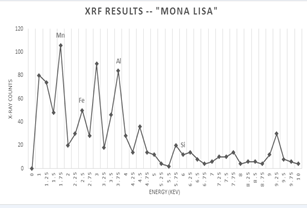
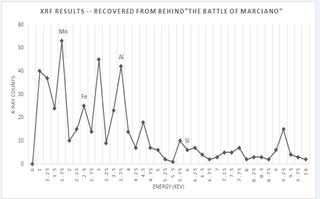
conclusion, our team decided that there was great evidence to suggest that “The Battle of Anghiari” may in fact lie beneath “The Battle of Maciano in Val di Chiana”. The question now is, what is the next step? Can “The Battle of Marciano in Val di Chiana“ be removed without damage to see what lies beneath? Is one piece of art more valuable than the other? Or is beauty in the eye of the beholder? Will we ever really know for sure if this is da Vinci’s lost piece?
New Challenge
Two weeks after the challenges were completed we found out that we had finished in the top 5 of competing schools. This was a great achievement as it was a global challenge with hundreds of entries across the world. We were given a final challenge and that was to make a video in response to the question:
“Do you think that the search for "The Battle of Anghiari" should continue at the potential expense of "The Battle of Marciano in Val di Chiana?”
Our team came up with many suggestions about what to do. Dress in costume, have a judge decide or make it a news article? We combined all three of these ideas into a short play where the two battling sides (Da Vinci’s battle and Vasari’s battle) battled it out and they were then interviewed for the News. The outcome was then decided by a judge. There was also a cross back to the News weather girl, Mona Lisa. The students had fun making the video and they had a bit of a giggle when it was played back to them in class.
I want to take this opportunity to congratulate all students involved on their analytical skills in solving the challenges and for their enthusiasm and team work in making the video. Well done!
For more information about the real life search - http://www.nationalgeographic.com/explorers/projects/lost-da-vinci/
Sue Hardy
NEUROSCIENCE
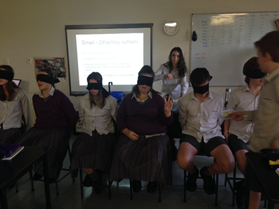
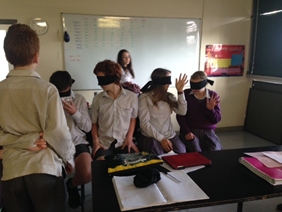
Neuroscience students have been learning about the olfactory system; our sense of smell. In this experiment, students were asked to identify a variety of substances as edible or inedible by smelling them while blindfolded.
INTERNATIONAL
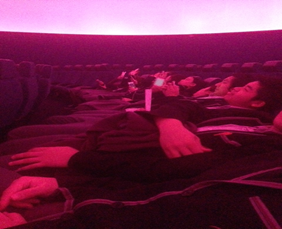
International students had an excursion to Scienceworks where they experienced my all time favourite: the planetarium. Unfortunately, they did not all share my enthusiasm for the experience with many of them saying it made them feel dizzy. Nevertheless, they will now be sure to identify the Southern Cross constellation and Orion’s belt (the saucepan) in our night sky.
PSYCHOLOGY
The little Baeffel’s visit Psychology class
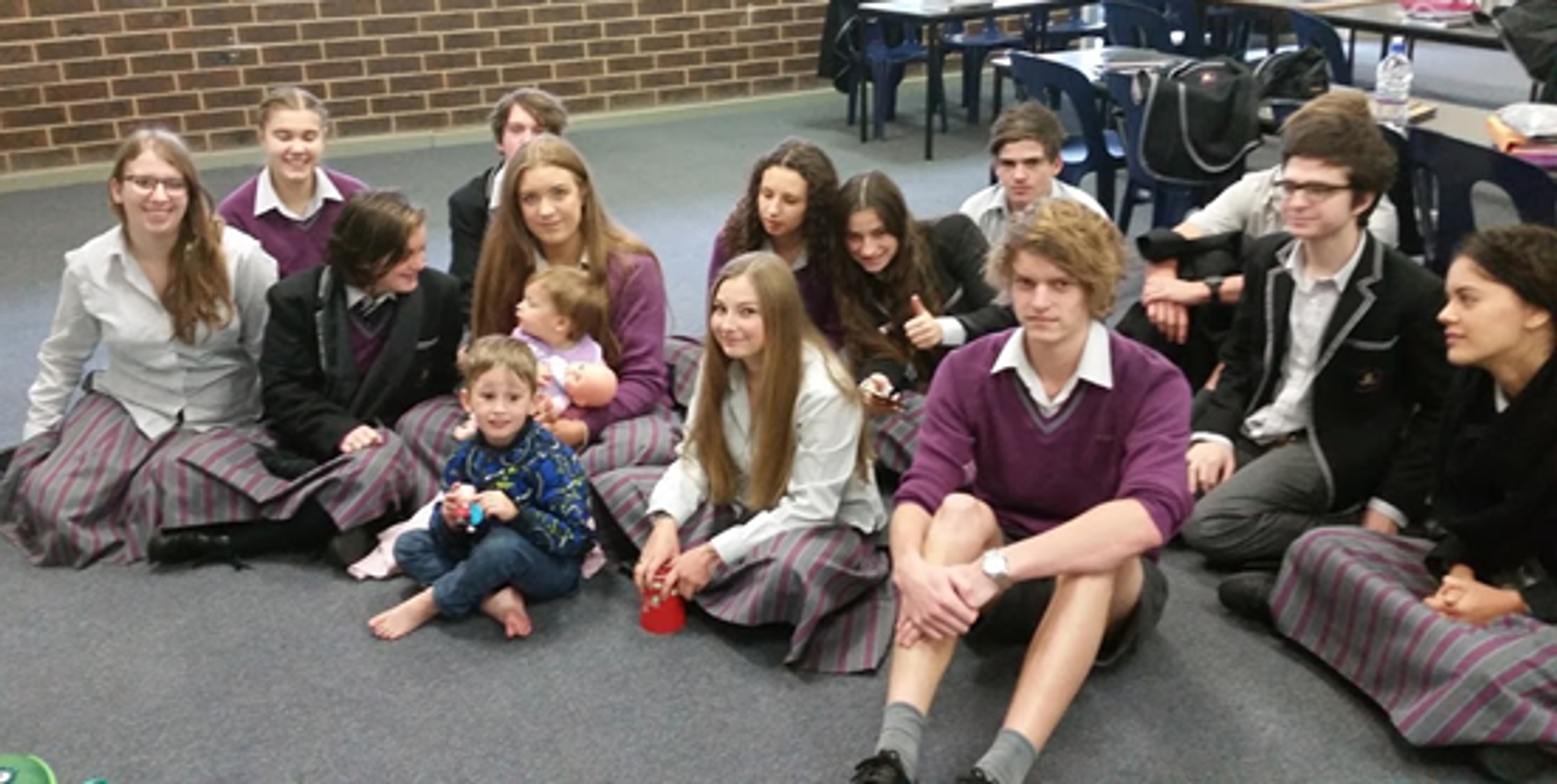
On Tuesday 17th May, Morgan and Dex shared our Year 11 Psychology class. The students were learning about Piaget’s Theory of Cognitive Development. As Morgan is in Sensorimotor stage and Dex is in Preoperational stage they participated in a range of informal games to show their levels of development. They both absolutely loved the attention and I think the Year 11’s enjoyed having them just as much!
YEAR 7 SCIENCE
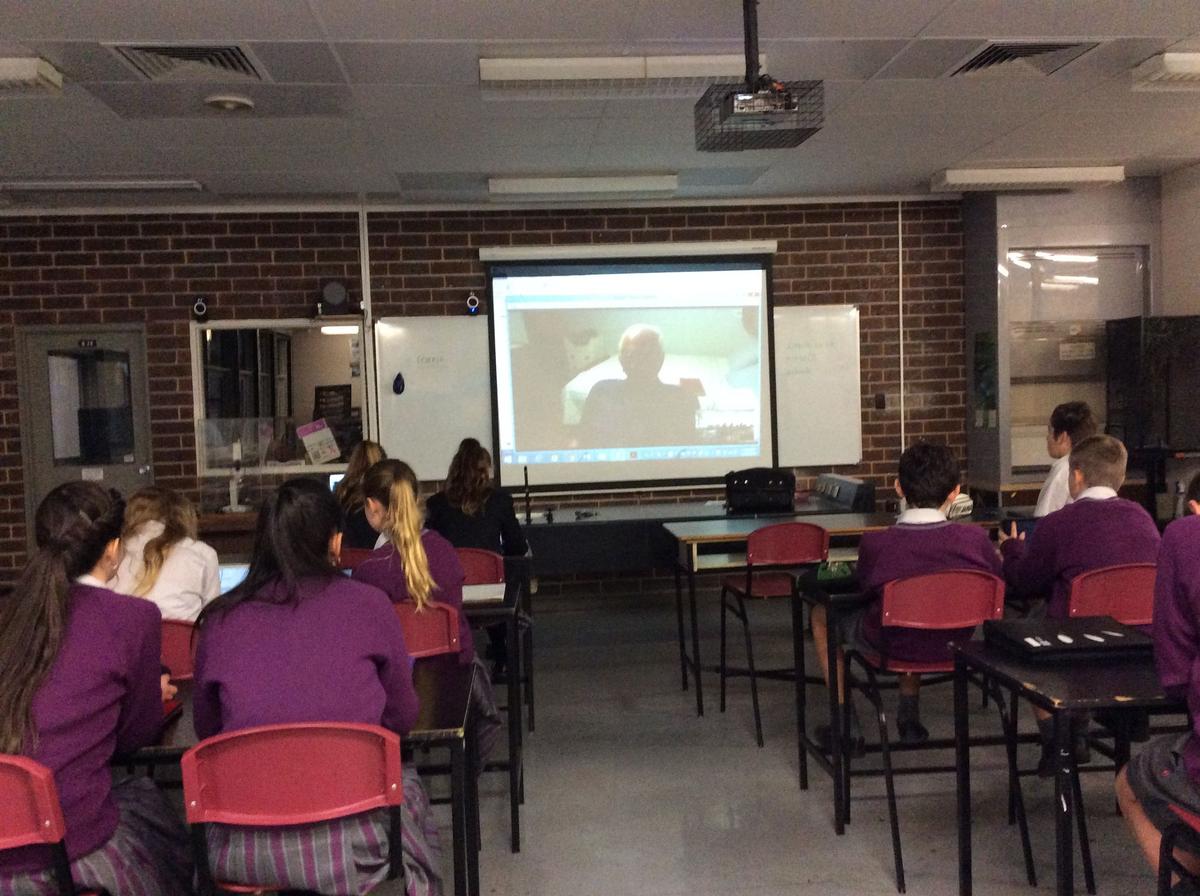
We have been studying the moon and the space programs that enabled man to go to the space and the moon. This included the Mercury, Gemini, Apollo and the Space Shuttle. Mrs Collard's father, Hale Hawkins, worked on the Gemini and the development of the space shuttle. 7D got the chance to Skype with him about his experiences working on these projects. The students found it interesting to talk to him and asking him questions about the design of the Gemini space capsules.